Skip to content
1. Introduction
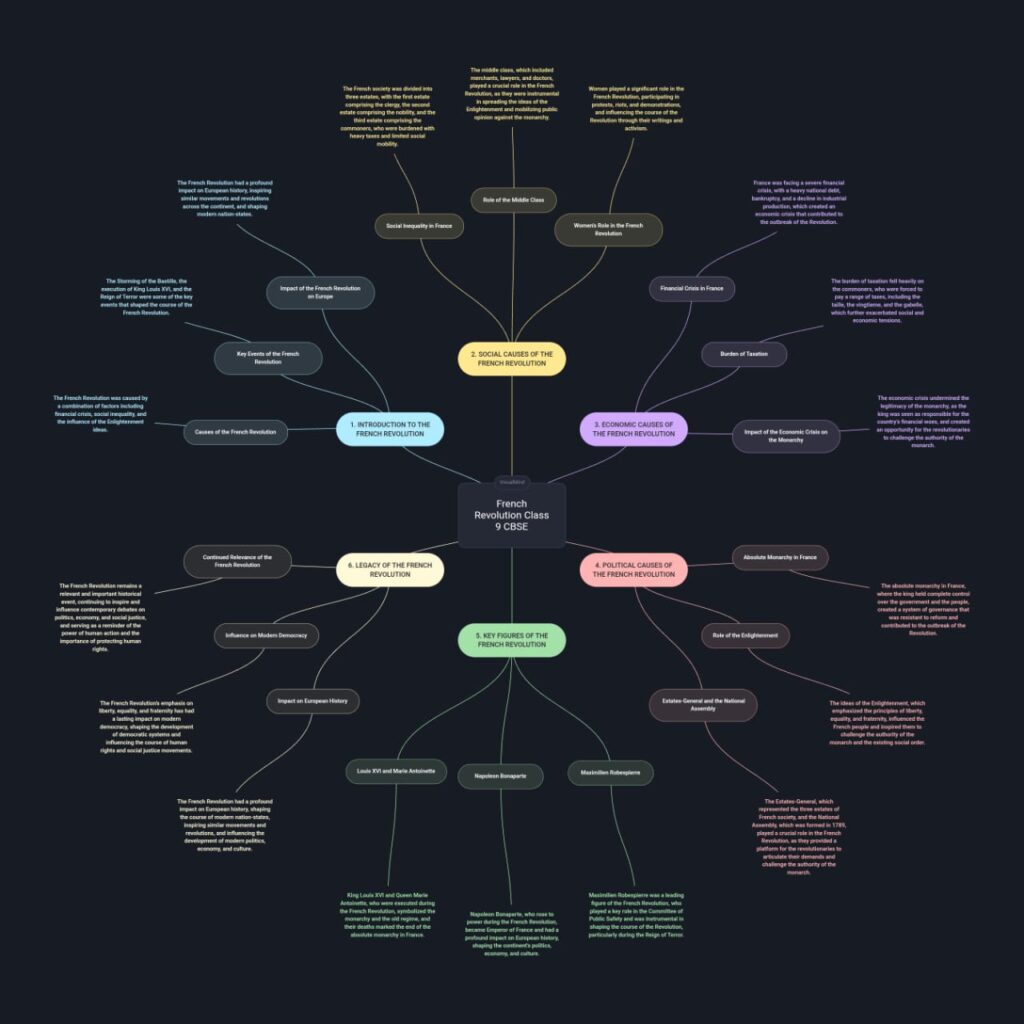
- The French Revolution began in 1789 and is seen as the start of modern democracy.
- It questioned absolute monarchy and promoted liberty, equality, and fraternity.
2. French Society in the 18th Century
- Society was divided into Estates:
- First Estate – Clergy (church officials, enjoyed privileges).
- Second Estate – Nobility (landowners, exempt from taxes).
- Third Estate – Peasants, workers, and middle class (paid all taxes, had no rights).
- Peasants & workers → suffered poverty.
- Middle class → educated, inspired by Enlightenment thinkers (Rousseau, Montesquieu, Voltaire).
3. The Struggle to Survive
- Population growth → high demand for food.
- Crop failures → bread prices rose.
- Peasants burdened with feudal dues, tithes (to church), and state taxes.
- Economic crisis worsened due to France’s debts (wars, lavish lifestyle of king).
4. The Outbreak of the Revolution
- King Louis XVI called a meeting of the Estates-General (1789) to raise taxes.
- Third Estate demanded voting by head, not by estate → rejected.
- Third Estate declared itself the National Assembly.
- On 14 July 1789, people stormed the Bastille Prison → symbol of the king’s oppression → start of the Revolution.
5. France Becomes a Constitutional Monarchy
- National Assembly drafted a Constitution (1791).
- Limited the powers of the king, established a constitutional monarchy.
- Only active citizens (men with property) could vote.
- Women and poor men were excluded.
6. France Abolishes Monarchy and Becomes a Republic
- France faced war with Austria and Prussia.
- Economic crisis → anger against monarchy.
- 10 August 1792: Monarchy abolished, France declared a Republic.
- King Louis XVI and Queen Marie Antoinette were executed (1793).
7. The Reign of Terror (1793–94)
- Led by Maximilian Robespierre (Jacobins).
- Harsh laws against enemies of the revolution.
- Guillotine used to execute people.
- Ended with Robespierre’s fall in 1794.
8. The Directory Rules France
- New Constitution (1795) → power in hands of a Directory (five members).
- Political instability continued.
- Napoleon Bonaparte rose to power in 1799.
9. Did Women have a Revolution?
- Women participated actively (clubs, demands for education, voting rights).
- But Constitution denied them political rights.
- Women’s struggle for equality continued.
10. The Abolition of Slavery
- Revolutionaries abolished slavery in French colonies (1794).
- But Napoleon later reintroduced it (1804).
- Finally abolished permanently in 1848.
11. The Revolution and Everyday Life
- New symbols: tricolour flag, national anthem (La Marseillaise), new calendar.
- Ideas of freedom and equality spread across Europe.
Summary (Quick Revision)
- 1789: Revolution begins with storming of Bastille.
- National Assembly → Constitutional Monarchy.
- 1792: France becomes Republic → King executed.
- 1793–94: Reign of Terror under Robespierre.
- 1795: Directory rules → Napoleon rises to power.
- Women participated but got no rights.
- Slavery abolished (1794, restored by Napoleon, ended 1848).
- Ideas of liberty and equality spread worldwide.